$24bn Oil Windfall in Nigeria Raises Fresh Doubts About the Next Energy Era
$24bn Oil Windfall in Nigeria Raises Fresh Doubts About the Next Energy Era
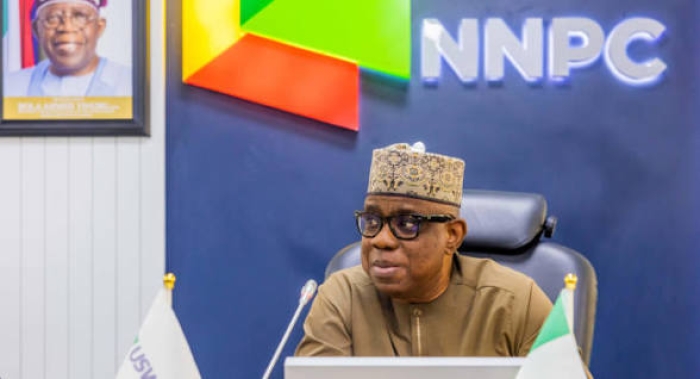
Nigeria’s upstream oil and gas sector has pulled in more than $24 billion in fresh capital after a series of regulatory interventions aimed at resolving long-standing disputes and unlocking stalled investment decisions, according to Nigerian National Petroleum Company Limited (NNPCL). Speaking at the 2026 Oloibiri Lecture & Energy Forum (OLEF 2026) in Port Harcourt, NNPCL Group Chief Executive Officer, Bashir Bayo Ojulari, said reforms led by the Nigerian Upstream Petroleum Regulatory Commission (NUPRC) have helped restore investor confidence and revive projects that had been delayed for years.
Ojulari, represented by the Executive Vice President, Upstream, Udobong Ntia, noted that Nigeria’s ambition to raise crude production to three million barrels per day depends heavily on a combination of capital inflows, digital innovation, and regulatory stability. According to him, resolving legacy asset disputes and creating clearer investment frameworks has begun to reposition the country as a competitive destination for global upstream financing.

Delivering the keynote address, NUPRC Chief Executive, Oritsemeyiwa Eyesan, said production growth can no longer rely solely on drilling activity, stressing the need for agile regulatory systems capable of attracting investment, enabling digital oilfields, and delivering long-term value. She noted that despite Nigeria’s significant hydrocarbon reserves, past underperformance demonstrates the importance of stronger alignment between policy direction, funding structures, and technological capacity.

Similarly, Nigerian Midstream and Downstream Petroleum Regulatory Authority (NMDPRA) Chief Executive, Saidu Mohammed, stated that achieving national targets of 3 million barrels per day of crude oil and 22 billion cubic feet of gas will require deeper financing channels, advanced technologies, and consistent policy frameworks capable of adapting to global energy market shifts.


Also speaking, Chairman of the Society of Petroleum Engineers (SPE) Nigeria Council, Francis Nwaochei, described OLEF 2026 as a strategic turning point for the industry, calling for a future anchored on data-driven operations, resilience, and shared economic value across the petroleum value chain.
However, while the renewed investment momentum signals confidence in Nigeria’s hydrocarbon sector, long-term competitiveness may increasingly depend on how effectively the country balances oil expansion with lower-cost alternatives such as Compressed Natural Gas (CNG) and electric mobility, which are gaining global traction as cheaper and more sustainable energy options.
What to Know:
The $24bn investment inflow reflects improving investor confidence, but it also highlights Nigeria’s continued dependence on oil revenues despite persistent structural weaknesses such as regulatory uncertainty, funding constraints, and vulnerability to global price shocks. Without deeper reforms that ensure policy consistency, transparency, and efficient project execution, the renewed capital may deliver only temporary production gains rather than the long-term stability needed to shield the economy from the recurring boom-and-bust cycles that have historically undermined sustainable growth.
SOURCE: NEWS SCROLL