YARN advocates agroecology to strengthen Nigeria’s food system
YARN advocates agroecology to strengthen Nigeria’s food system
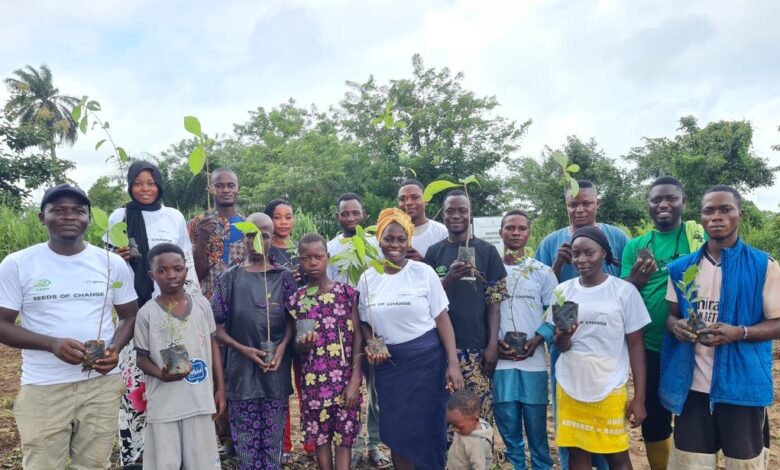
The Youth in Agroecology and Restoration Network (YARN) has called for greater investment in agroecology and sustainable food systems as a pathway to tackling food insecurity, climate change, rural poverty, and youth unemployment in Nigeria.
The call was made during the implementation of its “Seeds of Change: Youths Mobilising for Agroecology Transition and Sustainable Food Systems” initiative, a project being implemented in Nigeria, Zambia, Kenya, and Zimbabwe to equip young people, women, and farming communities with practical skills in sustainable agriculture.

According to YARN, the initiative seeks to strengthen the capacity of participants to adopt agroecological practices while building more resilient, inclusive, and environmentally sustainable food systems.


Speaking on the project, Co-Founder and Director of Operations of YARN, Dare Elujulo, said the future of Nigerian agriculture depends on empowering farmers and local communities rather than relying solely on agricultural inputs.


“The future of Nigerian agriculture will not be secured through inputs alone. It will be secured through people, the farmers, women, young people, and communities who are already developing solutions to the challenges they face,” Elujulo said.
He noted that the Seeds of Change initiative demonstrates how communities can restore ecosystems, improve livelihoods, and build food systems that benefit both people and the environment.
The project’s first phase focused on training participants in the principles of agroecology, sustainable food systems, and the production of bio-inputs using locally available resources to improve soil fertility, plant health, and reduce dependence on costly synthetic fertilizers.
The second phase featured practical training on agroforestry, perennial farming systems, water conservation, contouring, and mulching—techniques aimed at helping farmers address drought, soil erosion, declining soil fertility, and unpredictable rainfall linked to climate change.
YARN said the practices would not only enhance agricultural productivity but also improve biodiversity, strengthen resilience to climate shocks, and restore degraded ecosystems.
The organisation also announced plans to establish a model agroecology farm that will serve as a demonstration and capacity-building centre for farmers and community members.
Programme Officer, Ojebola David, said the proposed farm would provide a practical learning environment where farmers can observe agroecological practices, exchange knowledge, test innovations, and strengthen their skills through peer-to-peer learning.
“Our vision is to establish a living demonstration site where farmers can observe agroecological principles in practice, exchange knowledge, test innovations, and strengthen their skills through peer-to-peer learning,” David said.
He added that many farmers across Africa are interested in sustainable farming methods but often lack access to demonstration sites, technical support, and continuous learning opportunities.
YARN stressed that achieving food systems transformation requires collaboration among governments, development partners, communities, women, and young people.
The organisation urged policymakers to support farmer-led innovations, strengthen extension services promoting sustainable agriculture, invest in community-based learning hubs, and create opportunities for youth and women to participate in food systems governance.
According to the organisation, such investments are essential to building resilient food systems capable of addressing Nigeria’s growing food security and climate challenges.