Cement price mystery deepens as FCCPC uncovers possible manipulation
Cement price mystery deepens as FCCPC uncovers possible manipulation
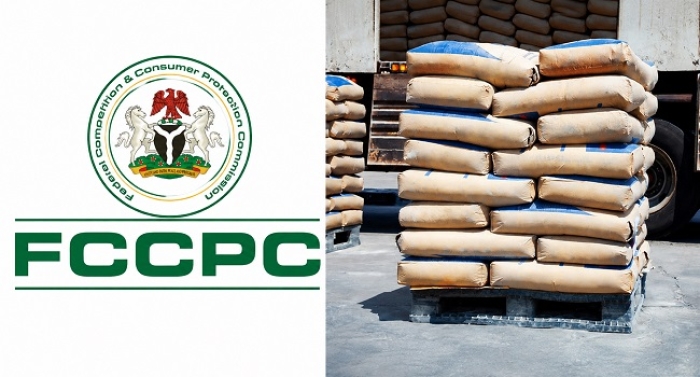
Nigeria’s competition regulator has uncovered preliminary indications of possible price manipulation in the cement industry, raising fresh questions about why the product remains expensive despite abundant limestone and production capacity far exceeding domestic demand.
Federal Competition and Consumer Protection Commission (FCCPC) said the findings emerged from a 40-page field report produced after a three-month study of Nigeria and selected African cement markets.

FCCPC Director of Corporate Affairs Ondaje Ijagwu said the investigation was triggered by persistent complaints about the rising cost of cement and its impact on housing, commercial development and public infrastructure.


The commission said three major companies control more than 90 per cent of Nigeria’s installed cement-production capacity. All major manufacturers cooperated by providing requested records except one company, which the regulator did not identify.


Nigeria’s installed capacity is estimated at between 60 million and 65 million metric tonnes annually, compared with domestic consumption of about 25 million to 30 million tonnes. The country also exports cement to neighbouring markets.
Ordinarily, such excess capacity and competition among producers should increase supply and place downward pressure on prices. Instead, a 50kg bag reportedly rose from between N9,300 and N9,700 in January to N10,500–N13,000 by mid-2026. By July, prices reached between N13,000 and N15,000 in some locations.
FCCPC compared Nigeria with Kenya, Tanzania, South Africa, Egypt, Morocco, Algeria and other African markets, examining population, limestone deposits, production capacity and domestic consumption.
In Nairobi, Kenya, a bag reportedly sells for about $5.40, equivalent to N7,344 using the commission’s exchange-rate calculation. Tanzania’s price was estimated at $4.80 or N6,528, while cement in Togo sold for approximately $6.75 or N9,180 despite the country’s lack of limestone deposits.
By comparison, Nigerians are paying considerably more in a country with extensive limestone reserves, large factories and surplus installed capacity.
Manufacturers blamed the increases on energy costs, naira depreciation, imported machinery and spare parts, transportation and logistics. The commission said it was testing those explanations against verified information on production costs, capacity utilisation, pricing and market conditions.
Although no final conclusion has been reached, the FCCPC said the strength of its preliminary findings provided sufficient grounds to continue the investigation.
The next phase will examine whether current prices can be justified by legitimate business costs or whether manufacturers and distributors engaged in coordinated pricing, restriction of domestic supply, abuse of market dominance or other anti-competitive conduct.
The commission has issued formal notices and summonses to key industry players, directing them to provide information concerning pricing methods, production, capacity utilisation, exports, distribution and commercial relationships.
FCCPC Executive Vice-Chairman Tunji Bello said the investigation was not intended to dictate companies’ business decisions or impose arbitrary prices.
“Cement occupies a strategic place in the Nigerian economy. Its price affects the cost of building a home, developing commercial property, delivering public infrastructure and, ultimately, the cost of doing business,” Bello said.
He added that the commission’s responsibility was to establish whether the market was operating competitively and whether consumers were benefiting from Nigeria’s substantial production capacity.
Any evidence of price-fixing, supply restriction or abuse of market power could expose companies to sanctions under the Federal Competition and Consumer Protection Act.
SOURCE: NEWSSCROLL