Why FG’s petrol discount is not enough By Taiwo Adisa, PhD
Why FG’s petrol discount is not enough By Taiwo Adisa, PhD

(Published by the Sunday Tribune, October 11, 2026)
Before the Minister of Finance and Coordinating Minister for the Economy, Mr. Taiwo Oyedele, announced some economic measures last Thursday, I was already wrapping up this week’s topic: “Tinubu and the search for alternative economic conversations.” That was because I had looked at the Tinubu administration’s responses to the excruciating poverty rocking the land since the now-famous “subsidy is gone” statement of 29 May 2023, made by President Bola Tinubu. In thinking about the emerging data and their implications, I had come to one conclusion: What shall it benefit a nation to make all the macroeconomic gains and lose a chunk of its population to poverty, want and squalor?

My conclusion was informed by the grim economic data out there. Nigerians are buying fuel at the same price they pay on the streets of the United States, whereas the gap in economic realities between the two countries, in terms of the basic minimum wage, is equivalent to the gap between the sun and the earth. But they say likes are supposed to be compared with likes. When oranges are compared with apples, the incongruity should be obvious to the clear-minded.

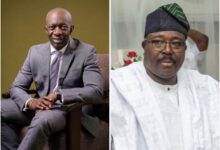
Earlier, I had some words with the renowned economist and writer Dr O. A. Lawal, a man in his late eighties whose books on Economics and Government gave foundation to the academic orientation of many of those who parade themselves as economists today. I asked Baba what the Tinubu government is getting right on the economic front and what it is getting wrong, and he provided answers without mincing words. According to the economist, the government is getting things right at the macroeconomic level, while it has not got its priorities right on the microeconomic front. And that is where reality dawns. The government is parading huge foreign reserves, which have crossed the $50 billion mark for the first time in 18 years or thereabouts. It is equally waving some letters of praise occasionally released by the IMF and the World Bank as indications that the economy has turned the corner. The government has also shouted from the rooftops its feat of paying off over ₦30 trillion in Ways and Means overdrafts by the Muhammadu Buhari government, as part of the macroeconomic wizardry it has brought to bear in three and a half years.

But when I looked at the realities all around me—the fact that we got to buy a litre of fuel at ₦1,400 in Abuja and at higher rates in some other locations; that workers are getting disenchanted with work because their take-home pay can no longer take them to work; and the rising cost of everything, whether it is a service by government or by the private sector—I knew there should be more to the economic conversation. When I read Farooq Kperogi’s October 3 article titled “World fights costly petrol, Tinubu defends it” in his Notes from Atlanta column in the Saturday Tribune, I knew I was not alone in ruminating on the circumstances of our countrymen. With the views of some industry players, Kperogi proved that Nigerians can buy fuel more cheaply than we currently do. He quoted the presidential candidate of the Accord Party, Gbenga Hashim, as also justifying the claim that fuel can actually come cheaper to Nigerians. Hashim is an industry player, one of the people who should know where the skeletons are buried.
So, Oyedele’s 8 October announcement appears to be telling us that the government is hearing our complaints. According to the Minister, the Federal Government would ensure a 30-day fuel discount that would guarantee the sale of petrol at ₦1,350 per litre at NNPC stations across the country. He also said that the government would not contemplate a return to subsidy because it could cost the nation ₦20 trillion annually, while assuring that the measure being introduced would be reviewed on a monthly basis.
It is good that, for once, the government did not hit us with the kind of “no alternative to SAP” declarations that we heard during the military era. For once, the government budged, even if only halfway. I will, however, say that the conversation by the government is not deep enough. Security and welfare of the people are the essence of government. It is to solve societal problems, no matter how hard they are. A government cannot bolt away from its responsibilities. To the incumbent administration, subsidies must go because of corruption, smuggling, and rising international costs. But corruption, smuggling, and the rest are man-made problems. If we have security men at the borders and they choose to close their eyes to smugglers, the government can wield the big stick. Why should Nigerians suffer because their neighbours are suffering? If officials see that they will pay a huge price for negligence, they will sit up. So, making smuggling an excuse is lame. Analysts have also said that the Naira is currently undervalued. So, what’s wrong with enabling the Naira to find its true value such that fuel prices can track down a bit? I have just mentioned two points that look like basic steps our experts can fine-tune without necessarily answering to undue futuristic speculations.
The Tinubu government took the option of a surgical operation on subsidy when it came in. But has that solved all the problems? The answer is obviously no. Subsidy was not the bad idea we are made to see by some economists and politicians. The idea behind it was noble originally, but its implementation got bastardised along the line. The government of President Olusegun Obasanjo (1999–2007) paid ₦812 billion as subsidy; Umaru Yar’Adua paid ₦794 billion between 2007 and 2010; Goodluck Jonathan spent ₦3.9 trillion between May 2010 and May 2015, while Muhammadu Buhari paid ₦11.7 trillion between 2015 and 2023. When Goodluck Jonathan attempted to remove the fuel subsidy in 2012, the loss Nigeria was incurring was a little less than ₦1 trillion annually; under Buhari, it went beyond ₦2 trillion annually. So, Tinubu did away with the baby and the bathwater. The result was pictured in the World Bank Country Partnership Framework (CPF) 2026–2032 report, released on 29 June 2026. It indicates that 61 per cent of Nigerians (139 million) are living below the poverty line. Of that, 33 per cent are rated ultra-poor, battling food insecurity and unable to meet minimum calorie intake. In fact, 79 per cent of Nigerians are considered poor or vulnerable, because they are either below the poverty line or one shock away. The trend has been on an upward swing since 2019, though. In 2018/19, 40 per cent (81 million) of the population was living below the poverty line; in 2022/23 it rose to 56 per cent (113 million); it was 61 per cent (129 million) in 2024; 63 per cent or 140 million people in 2025; and 62 per cent or 141 million people in 2026. The Bank, in its projection, however, said that the 2027 figure might reduce to 61 per cent, or 140 million people, which it said would be the first decline in a decade. While the Bank gives the government credit for the removal of the fuel subsidy and foreign-exchange unification, which account for macroeconomic stability, the 3.9 per cent growth and over $50 billion in foreign reserves, it agrees that the reforms have also triggered inflation, strangling household incomes, with many spending as much as 70 per cent of earnings on food and transportation.
The grim statistics tell us all is not well at the microeconomic level and that the citizens are bearing the brunt of the reforms. And since reforms are made for betterment—because men are not supposed to be sacrificial lambs on the altar of reforms—there must be deeper conversations on the way out of the woods. But those who wish to sound triumphant about the rise in foreign reserves and the 3.9 per cent growth in GDP still have questions to answer. How come the nation is unable to execute its national budgets despite the acclaimed stability in FX, the rise in foreign reserves, and the GDP growth? The National Assembly resumed recently only to extend the life of the 2025 capital votes to December 2026. No one is sure what really happened to the 2024 budget that came earlier, while the totality of the 2026 capital budget may just end up on paper, rather than transforming into projects. It is looking as if the idea of an annual budget at the National Assembly has been defeated under this administration. Maybe a recourse to five-year development plans would work here.
Beyond all the high-sounding economic terms which the experts may adopt to confuse the uninitiated, the reality stands as firm as the Olumo Rock. A Nigeria that pays ₦70,000 as minimum wage cannot in true conscience ask its citizens to pay ₦1,350 per litre of petrol. But because the economists have convinced our government to toe that line, we are already seeing the realities. Workers’ output in the public sector is near zero. They barely come to work thrice in the week. The system is encouraging crookedness and corruption; the workers are hardly able to fuel their cars to work, and those who go by public transport are not faring better. That creates the room for corruption to thrive. We heard recently that several fake agencies litter the books of the Federal Government. The more the government tightens the economic noose, the more it kills its own system. The elders say that the teak is committing suicide but claims it is killing the dog. When a bearded man is burnt to ashes, it is needless to ask for his beard. That same fate befalls the teak that eats up its host-the dog. No matter what economic theory you propound, the security and welfare of the people is the primary purpose of government. Government is not a P&L centre (profit and loss). This administration must find a lasting solution to the subsidy curse in the nation’s oil sector and get fuel to its people at a reasonable cost. Any arrangement that forces a worker to commit 50 per cent of his earnings to transportation is not sustainable. You cannot justify the sale of fuel in Nigeria at the same rate as in states of the US, except you collapse the naira and adopt the American dollar as the national currency. The alternative is to learn from the oil-producing states, where oil is being made to work for the people.