When a Child Runs From Strangers, a Nation Has Already Failed. By Oluwapemi Bamidele
When a Child Runs From Strangers, a Nation Has Already Failed. By Oluwapemi Bamidele
There are tragedies that announce themselves with explosions. There are others that whisper.
The tragedy of Orire belongs to the latter.

It does not scream anymore. The television cameras have left. The hashtags have died. Politicians have moved on to the next ceremony. The nation has folded the incident into another statistic in our expanding archive of insecurity.


But if you drive into Ahoro Dada today, you will discover that silence can be louder than gunfire.


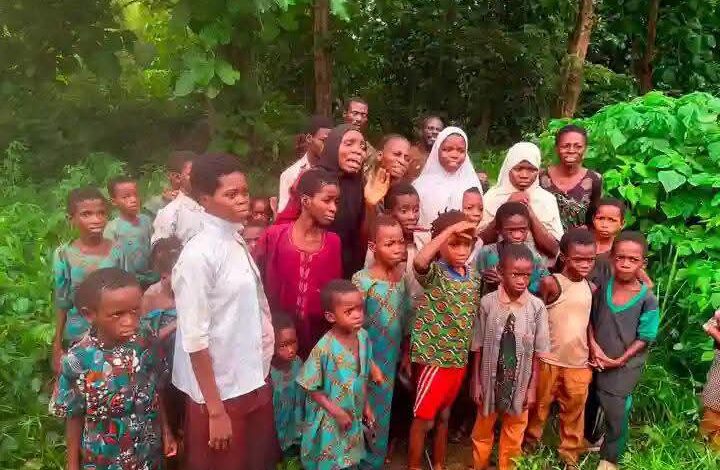
The children have returned.
Their childhood has not.
We Nigerians have developed an unhealthy relationship with survival. We celebrate it as though survival is the same as healing. Once victims are rescued, we organise thanksgiving services, issue congratulatory statements, exchange handshakes and quickly convince ourselves that normalcy has returned.
Yet, there is a stubborn question Orire asks all of us.
What exactly returned home?
Certainly not innocence.
Not trust.
Not peace.
A nation often reveals itself in the way it treats its children.
In societies where governments understand the sacredness of childhood, schools are temples of hope. Parents wave goodbye in the morning without calculating the probability of seeing their children again before sunset.
In Nigeria, particularly in many rural communities, education has gradually become an act of courage.
We have normalized what should horrify civilized societies.
Parents now conduct risk assessments before deciding whether a child deserves literacy.
Think about how absurd that sounds.
The argument is no longer whether a child should become a doctor, engineer or teacher.
It is whether the child should survive Primary Four.
Walking through Orire, one quickly realizes that kidnappers stole something far greater than fifty six days from those children.
They stole certainty.
There is a grandfather who has concluded that his grandchildren will never return to school.
He is not uneducated.
He is not ignorant.
He is simply terrified.
His ancestors are buried in Orire. He refuses to abandon the land that carries their memories.
But he has quietly exiled the future.
His grandchildren now belong elsewhere.
One attack has succeeded where decades of rural development could not.
It has begun emptying villages.
This is how terrorism wins.
Not merely by killing.
But by making people abandon places they once called home.
Then there is another father whose son survived captivity.
His argument is different.
“If this school dies,” he says, “the kidnappers have won.”
His courage deserves applause.
But courage should never become government policy.
Ordinary citizens should not be forced to gamble with their children’s lives simply because the state cannot consistently guarantee security.
Heroism is admirable.
It should never become compulsory.
Perhaps the most haunting image from Orire is not Bello Hassan’s scars.
Not the stories of children sleeping beneath torn nylon sheets in the forest.
Not even the screams of teachers disappearing into the trees.
It is a four-year-old girl.
She sees strangers.
She runs.
That single movement tells us more about trauma than volumes of psychological reports ever could.
Children are naturally curious.
Fear is learned.
Someone taught that little girl that unfamiliar faces could become the beginning of captivity.
How does a nation refund stolen innocence?
Which government budget rehabilitates a frightened childhood?
Which security vote restores trust?
Which political speech teaches a child to smile again?
There is another silence in Orire that should disturb our conscience.
Mrs. John Olaleye.
While others embraced rescued loved ones, she waited for a husband who never returned.
Even death denied her closure.
His body has not been recovered.
No funeral.
No grave.
No final prayer.
Only questions.
And three children.
How does a widow explain absence without a body?
How long does grief remain suspended when burial itself becomes impossible?
Some losses refuse grammar.
The government deserves commendation for the rescue operation.
The Nigerian military deserves appreciation.
Lives were saved.
That must never be diminished.
But successful rescue cannot become the full stop in this conversation.
It should only be the comma.
Because security is not measured only by the number of hostages rescued.
It is measured by the number of children who never become hostages in the first place.
There is a profound difference.
Perhaps our greatest national weakness is our addiction to events rather than consequences.
We respond magnificently to emergencies.
Then we abandon recovery.
We mobilize helicopters.
We neglect therapists.
We celebrate rescue.
We forget rehabilitation.
Yet trauma is patient.
It survives long after television coverage expires.
Doctors understand this.
Psychologists understand this.
Only governments sometimes pretend not to.
The bruises on a child’s body may disappear in weeks.
The bruise on memory often lasts decades.
The road leaving Orire looks deceptively peaceful.
Motorcycles pass.
Women roast garri.
Farmers return from their fields.
School bells ring again.
Everything appears normal.
Until a little girl notices strangers.
She runs.
And suddenly one understands that Nigeria has become a country where children escape forests but remain imprisoned by fear.
Perhaps that should trouble us more than the kidnapping itself.
Because a nation may recover from attacks.
It rarely recovers easily from children who no longer believe the world is safe.
The gunmen left the forest.
Their shadows did not.
And until every Nigerian child can walk into a classroom without carrying fear like a school bag, we have no moral right to declare victory.
The children came home.
Nigeria still has a long journey ahead.