Nigerians sound alarm as suspected fake products flood markets
Nigerians sound alarm as suspected fake products flood markets
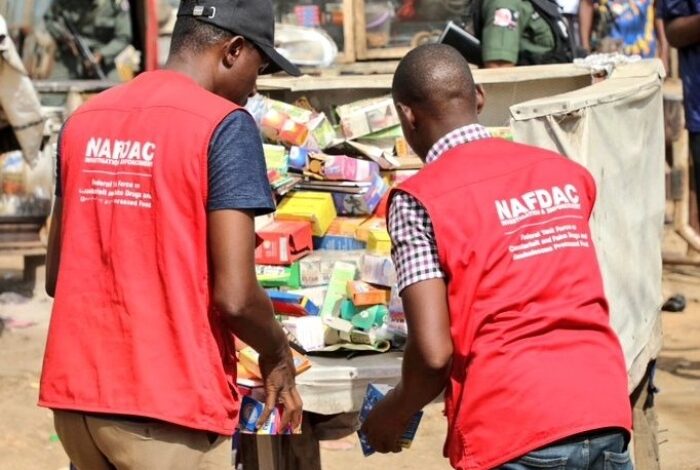
National Agency for Food and Drug Administration and Control and the Standards Organisation of Nigeria are facing mounting criticism as Nigerians use social media to expose food, medicines, cosmetics and other consumer goods suspected to be counterfeit, substandard or unsafe.
Videos and photographs circulating on X, TikTok and Instagram have shown consumers comparing products believed to be genuine with suspected imitations. The posts have renewed questions about how counterfeit goods continue to reach shops and markets despite the legal responsibilities of NAFDAC, SON and other enforcement agencies.

Many of the claims have not been independently verified or confirmed through laboratory testing. Nevertheless, their frequency has deepened public anxiety and intensified demands for better surveillance of ports, warehouses, markets, shops and online trading platforms.


One of the most widely shared alerts concerned suspected counterfeit Oral-B toothpaste. Nigerian doctor Somto Okonkwo posted a video comparing two products, drawing attention to differences in their packaging, seals, texture, appearance and flavour.


Okonkwo said he visited between five and seven shops and found what he believed were counterfeit versions in each location, adding that some retailers appeared unaware that the products might not be genuine.
The video gained wider attention after it was reposted by United Kingdom-based Nigerian physician Olufunmilayo Ogunsanya. The warnings particularly alarmed consumers because counterfeit toothpaste could contain unsafe ingredients in place of substances approved for legitimate production.
However, differences in colour, thickness, packaging or taste are not conclusive proof that a product is counterfeit. Manufacturers sometimes alter packaging or formulations, making verification by the producer or regulator necessary before definite conclusions can be reached.
Similar concerns emerged over videos purportedly showing counterfeit Hollandia yoghurt being packaged under unsanitary conditions. Other clips featured consumers pouring genuine and suspected fake yoghurt into transparent containers to demonstrate differences in thickness and creaminess, while also pointing to alleged inconsistencies in barcodes and packaging.
The manufacturer and regulators had not publicly confirmed all the claims at the time of the report. Still, the footage fuelled demands for investigations capable of identifying the producers, distributors and retail outlets involved.
Concerns also spread to commonly used medicines after photographs posted on September 4 showed two paracetamol tablets said to have come from the same company but appearing noticeably different in colour.
Ogunsanya, who shared the photographs, said most consumers would not detect such differences unless the tablets were placed together. He criticised NAFDAC over what he described as a failure to prevent questionable medicines from reaching Nigerians.
Other social media users reported suspected cases involving palm oil allegedly enhanced with dyes, imitation cooking oils, adulterated drinks, bottled and sachet water, cosmetics, baby formula, vehicle components and tyres. Some also complained about noticeable differences in the taste, texture or appearance of supposedly identical products bought from separate shops.
Again, these consumer observations do not by themselves prove counterfeiting, but their spread points to a widening crisis of confidence in Nigeria’s consumer market. Increasingly, buyers say they no longer know whether ordinary products purchased from shops are genuine, properly stored, expired or dangerously adulterated.
Oluwole Olofintuyi, an X user, argued that the scale of the allegations raised questions about possible complicity among some importers, distributors and regulatory officials.
“Wherever you go: fake milk, fake yoghurt, fake bread, fake palm oil, fake medicines, fake toothpaste, fake baby formulas, fake beverages, fake toothbrushes, fake bottled and sachet water, fake vehicle parts, fake tyres,” he wrote.
Another user, Chinedu Samuel, questioned NAFDAC’s effectiveness, arguing that the circulation of counterfeit products threatened both public health and legitimate businesses. Others accused the agency of paying insufficient attention to its core regulatory duties.
Abou Opeyemi called for collaboration among NAFDAC, SON, the Federal Competition and Consumer Protection Commission, the National Drug Law Enforcement Agency and the police, saying the government should treat fake medicines as a national emergency.
The growing criticism comes despite several large-scale operations conducted by NAFDAC. In February 2026, the agency reported seizing more than 10 million doses of counterfeit malaria medicines and other pharmaceutical products at the Lagos Trade Fair Market.
Its operatives also discovered warehouses concealed within an uncompleted building in Apapa, Lagos, containing banned, unregistered and suspected counterfeit medicines reportedly valued at more than ₦3bn. The products included prohibited injectable antimalarials, antibiotics and other pharmaceutical preparations stored alongside perfumes, body oils and cooking oils.
In 2025, NAFDAC said about 30 per cent of medicines found in open drug markets were fake or substandard. In March of that year, the agency confiscated and destroyed products estimated at ₦1tn following operations in major drug markets in Onitsha, Aba and Lagos.
The seized products reportedly included banned Analgin, high-dose Tramadol and other unregistered, expired or falsified medicines. The operations demonstrated the scale of the illegal trade but also raised a troubling question: how many dangerous products had already reached consumers before enforcement officials intervened?
Medical professionals warned that counterfeit products could cause severe and sometimes irreversible harm. Rotimi Adesanya, Director of Medical Services at the Federal College of Education, Akoka, Lagos, said fake foods, drinks, drugs and cosmetics could contain contaminants capable of damaging the liver, kidneys and heart.
He said some counterfeiters use unauthorised chemicals to imitate the colour, thickness, fragrance or texture of legitimate products, exposing consumers to substances never intended for human consumption.
Adesanya identified poverty and declining purchasing power as factors helping the illegal market to thrive. As genuine products become more expensive, many consumers gravitate towards cheaper alternatives without knowing that some may be fake, improperly stored or already degraded.
He also explained that “best before” and expiry dates do not necessarily have the same meaning. While some products may gradually lose their optimal quality after their best-before dates, expired medicines can lose potency and fail to treat the conditions for which they were purchased. That failure can become deadly where patients depend on medicines for malaria, bacterial infections or other serious illnesses.
Adesanya urged NAFDAC to conduct regular inspections and random laboratory analyses of products taken directly from shelves rather than limiting its oversight to factories and registration processes.
A former Chairman of Nigerian Medical Association in Lagos State, Saheed Babajide, similarly blamed weak and inconsistent enforcement for the persistence of counterfeit medicines.
Babajide said fake or substandard medicines might contain too little of an active ingredient, the wrong ingredient or none at all. Patients could therefore remain ill despite taking what they believe to be appropriate treatment.
He warned that ineffective antimalarial medicines could prolong illness, increase hospital admissions and impose additional financial pressure on families. Substandard antibiotics could also contribute to antimicrobial resistance by exposing infections to doses too weak to eliminate them.
According to him, the consequences extend beyond individual patients because treatment failures place further pressure on an already strained healthcare system.
Babajide called for laws imposing tougher punishment on people who manufacture, import or distribute counterfeit medicines, arguing that offenders should not be allowed to escape with penalties too small to discourage the lucrative trade.
Public commentators also demanded an overhaul of the country’s regulatory framework. Lagos-based commentator Segun Odunewu accused NAFDAC of failing to maintain the aggressive anti-counterfeit campaign associated with the tenure of its former Director-General, the late Dora Akunyili.
“NAFDAC is not the NAFDAC of Dora Akunyili’s era. Her efforts are being wasted,” Odunewu said, calling for greater accountability from the agency’s leadership.
Public affairs analyst Adebayo Abubakar, however, rejected suggestions that NAFDAC or SON should be scrapped. He argued that both agencies were established for essential purposes and should instead be strengthened, adequately equipped and held accountable.
“These are not ornamental agencies; the law gives them precisely the powers required to police the marketplace,” Abubakar said.
He maintained that the presence of fake medicines, adulterated foods, substandard electrical products, unsafe building materials and imitation consumer goods raised fundamental questions about the effectiveness of regulation and enforcement.
Another analyst, Musa Aliyu, called for a review of the National Policy on the Contamination of Drugs and Unwholesome Practices of Pharmaceuticals. He argued that the counterfeit problem had moved beyond medicines and now required coordination among regulators, security agencies and communities.
Aliyu also proposed decentralising more of NAFDAC’s operations to strengthen grassroots monitoring. He said local communities must be taught how to report suspected products and preserve evidence that could help regulators trace illegal supply chains.
Lawyers who spoke about the controversy demanded stronger sanctions and more consistent prosecution. Lagos-based dispute resolution lawyer Muhammed Adam urged the Federal Government to declare a state of emergency on fake and substandard products, describing the trade as organised economic and public-health sabotage.
“A group of greedy, organised criminals cannot keep poisoning this country while they smile to the bank,” Adam said.
He argued that counterfeiters deliberately target products central to daily life, including medicines, foods, drinks, cosmetics and items used by children.
Adam cited previous seizures by the Nigeria Customs Service involving expired medicines and products allegedly bearing fake NAFDAC registration numbers. These included a consignment in Apapa reportedly valued at ₦53.4bn and another interception of suspected counterfeit antimalarial drugs worth ₦1.2bn concealed under a declaration of spare parts.
He warned that counterfeiters were exploiting groupage cargo, informal distribution chains and online marketplaces to conceal their identities and evade regulators.
“People die from malaria that the ‘treatment’ never treated, from antibiotics that never fought infection, from cosmetics loaded with mercury and steroids, and from electrical and auto parts that fail when lives depend on them,” he said.
Another lawyer, Ibrahim Adebayo, accused regulatory agencies of failing to sustain previous campaigns during which warehouses were raided, goods confiscated and suspects prosecuted.
Adebayo alleged that occasional seizures and public warnings would achieve little without dismantling the networks responsible for manufacturing, financing, importing and distributing the products.
He called for stronger intelligence-sharing among NAFDAC, SON, Customs, the FCCPC and security agencies, saying counterfeiters often exploit poor coordination between government institutions. He also urged regulators to monitor online marketplaces where sellers can advertise suspicious products while remaining physically distant from their customers.
The controversy has further exposed apparent gaps in responsibility among the agencies. NAFDAC’s Head of Enforcement, Martin Iluyomade, did not respond to calls and WhatsApp messages seeking the agency’s reaction.
A senior SON official, who spoke anonymously, said fake, substandard and falsified medicines fell under NAFDAC’s mandate and advised that questions concerning such products be directed to the agency.
The official’s response did not address complaints about counterfeit vehicle parts, tyres, electrical materials and other non-food or non-pharmaceutical goods ordinarily associated with SON’s standards-enforcement responsibilities.
As public pressure rises, stakeholders insist that confiscating counterfeit goods is not enough. They want regulators to trace producers and financiers, publish laboratory findings, prosecute offenders and disclose the outcomes of major enforcement operations.
Without visible consequences for those behind the trade, they warned, counterfeit products would continue to reappear after every raid leaving Nigerians to gamble with their health each time they purchase food, medicine or another supposedly familiar product.
SOURCE: NEWSSCROLL