Judge Me by My Performance – Adegboyega’s SOLUTIONS Agenda and the Test of Oyo’s Future
Judge Me by My Performance - Adegboyega’s SOLUTIONS Agenda and the Test of Oyo’s Future
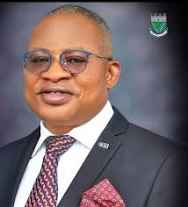
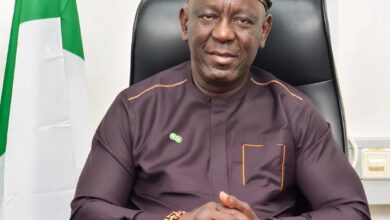
When Olóyè Toafek Adegboyega speaks about his ambition to govern Oyo State, he returns repeatedly to one proposition: voters should not have to rely on campaign rhetoric to determine whether he deserves a second term. They should judge him by what he delivers.
“Judge me by my performance,” the African Democratic Congress (ADC) governorship candidate declares, directing the challenge at the people whose votes he hopes to earn in the next governorship election.

It is a bold invitation in a political environment where manifestoes often arrive with ambitious promises, but the distance between what candidates say and what governments accomplish can become apparent only after the ballots have been counted.

For Adegboyega, the answer lies in what he describes as his nine-point SOLUTIONS agenda, a programme that he says is designed to confront the interconnected problems of unemployment, insecurity, inadequate healthcare, infrastructure deficits and the underutilisation of Oyo State’s human and economic resources.


His pitch is not limited to building roads or commissioning public facilities. He argues that governance should be measured by its capacity to create opportunities, improve the quality of life and make public resources work for the greatest number of residents.
“We need to bring development to our state. We need to plan our major cities. We need to provide jobs for our youth,” he says, outlining the challenges he believes should define the next phase of leadership in Oyo State.
Behind the proposals is a recurring argument: that the state cannot afford to treat its development challenges as isolated problems. Unemployment, in his estimation, feeds economic hardship and social instability; inadequate primary healthcare pushes patients towards overstretched hospitals; poorly managed public assets deprive the state of resources; and infrastructure projects that exclude local businesses lose opportunities to stimulate the wider economy.
His SOLUTIONS agenda, as he explains it in the interview, is an attempt to connect these issues through planning, investment, accountability and targeted social interventions.
Yet, for a candidate asking the electorate to judge him by performance, the promises invite equally important questions. How would he finance his proposed projects? What safeguards would prevent political patronage? How would the state measure improvements in healthcare, employment and public accountability? And what would residents be entitled to demand if the results fell short of the promises?
These questions sit at the heart of Adegboyega’s campaign challenge. His proposed solutions offer a picture of the Oyo State he wants to build. Their ultimate significance will depend on whether they can be translated into measurable outcomes.
SOLUTIONS: Beyond the language of a manifesto
Adegboyega presents his nine-point agenda as a framework for addressing the state’s development needs rather than a collection of disconnected campaign pledges. Throughout the interview, he repeatedly returns to the importance of determining priorities, identifying capable people and ensuring that each project delivers tangible benefits.
For him, the central question is not simply what a government can build, but what its people stand to gain from the resources committed to it.
“Which will give my people the most benefit?” he asks, describing the calculation that, in his view, should guide decisions on public spending.
He illustrates the point by comparing expenditure on a major stadium renovation with investment in water supply. Both may have public value, but he argues that government must assess their relative benefits and decide which need deserves priority when resources are limited.
“That’s why you must put a scale of preference,” he says. “You list them, you rank them. You build up your scale of preference and then pick based on the available resources.”
The principle reflects an economic argument that runs through his proposals: government resources are finite, needs compete for funding, and choices should be guided by public benefit rather than the private interests of those making them.
He is particularly critical of what he describes as projects selected because they create opportunities for political or personal gain rather than because they address the needs of the majority.
“Not which one will bring more money into your pocket,” he says, explaining the standard he wants applied to public expenditure.
This emphasis on value for money is also linked to his insistence that a governor cannot deliver alone. The quality of an administration, he argues, depends on the people appointed to implement its policies.
“I always say you’re as good as your team,” he says.
Adegboyega maintains that he has been identifying people whose experience and competence could be useful in different sectors, rather than waiting until after an election to begin considering appointments.
As he encounters people professionally and socially, he says, he makes mental or written assessments of what they can contribute. Several candidates may be considered for the same responsibility, but the final choice, he says, should be based on competence.
“I don’t want to wait till after the election before I say, ‘Oh, who can do what?’” he explains.
The approach is intended to help him begin governing with a clearer understanding of the personnel and expertise available to execute his plans.
However, identifying capable people before assuming office is only one part of the challenge. A functioning administration would also need transparent recruitment and appointment procedures, clear performance targets and mechanisms for holding public officials accountable. Adegboyega’s emphasis on competence establishes his stated intention; the effectiveness of the system would ultimately be judged by its implementation.
Jobs as the engine of development
Among the issues that dominate Adegboyega’s interview is unemployment, particularly among young people.
He argues that Oyo State cannot fully realise its economic potential if a substantial proportion of its working-age population remains unable to find productive employment. He estimates that young people account for a significant share of the state’s population, although the figures he cites are not independently established in the interview.
His broader argument is that an unemployed young population represents more than a social welfare concern. It is also a loss of productive capacity for the state.
“When they are productive and they are able to earn something at the end of the month, it means they can also be able to go to the market and buy something for themselves,” he says.
For Adegboyega, employment is therefore both a route out of individual hardship and a means of stimulating local economic activity. A worker who earns an income can buy food, clothing and other necessities, supporting the businesses that supply them. Those businesses, in turn, can pay their workers and purchase goods from other suppliers.
He describes this as the multiplier effect of economic activity: money spent in one part of the economy generates further transactions and creates opportunities beyond the initial point of expenditure.
His example is deliberately practical. A construction project may employ engineers, artisans and labourers directly, but it can also create income for food sellers, transport operators, vendors and suppliers of construction materials.
“If you are a food seller and you take food there every day to serve to the workers, that’s a job opportunity for you as a food seller,” he explains.
The same applies to people selling drinking water, maize or other goods to workers at a construction site. They may not be employed by the contractor, but the project creates a market for their services.
“All vendors are benefitting,” he says, describing the chain of economic activity that can develop around a major project.
This is a central feature of his SOLUTIONS philosophy. In his view, job creation should not be treated as a separate promise attached to a manifesto. It should be built into the planning and execution of government projects.
“Every step, every project must create jobs. Jobs for people,” he says.
The proposal places an important responsibility on the government to consider who benefits from public expenditure. A project may be completed and provide a useful service, but its wider economic value can depend on whether local businesses and workers are able to participate.
Adegboyega’s approach suggests that the employment impact of projects should be assessed alongside their immediate purpose. A road, rail line or public facility would not only be judged by the infrastructure delivered but also by the direct and indirect economic opportunities generated during construction and operation.
For this approach to be meaningful, however, job creation would need to be measured rather than assumed. The number of people employed, the duration of their employment, the proportion of contracts awarded to qualified local businesses and the sustainability of the resulting jobs would all help determine whether the promised benefits had materialised.
The underlying challenge is clear: Oyo State needs economic opportunities that can absorb young people entering the labour market while enabling existing businesses to grow. Adegboyega’s argument is that government can help achieve this by designing projects around a wider understanding of productivity.
A rail line that promises more than transportation
One of Adegboyega’s most ambitious proposals is the construction of a rail line intended to improve movement across parts of Oyo State and open up areas with economic potential.
He presents the proposal as a means of connecting communities, improving the movement of agricultural produce and creating a mass-transit option capable of carrying more passengers than conventional road transport.
The project, he explains, would be implemented in three phases. He identifies the stages as extending from Ibadan towards the other locations mentioned in the interview, including Oke-Ogun and Shaki, although the precise alignments and engineering details are not fully established in the conversation.
His insistence on a phased approach is an acknowledgment that a project of this scale cannot reasonably be completed at once.
“Three phases,” he says, describing the planned sequence.
Adegboyega argues that major infrastructure projects can attract development partners willing to contribute funding where the expected public benefits are substantial. He points to the possibility of collaboration with development agencies and says the state would need to work with the Nigerian Railway Corporation to secure the necessary approvals.
He also refers to funding arrangements in which public authorities and development partners contribute resources towards a project. In his view, the potential benefits of a rail line connecting several local government areas could make it attractive to partners looking to support transport and economic development.
But the proposal raises practical questions that would need to be answered before construction could begin. These include the precise route, feasibility studies, projected passenger and freight demand, land acquisition, environmental considerations, construction costs, funding commitments and arrangements for maintaining the railway after completion.
Adegboyega says he wants to begin the groundwork within his first 100 days in office. That is a commitment to initiate the project, rather than evidence that the line could be completed within that period.
He also argues that the years required to construct such infrastructure could provide employment for thousands of people. During the interview, he suggests that a five-year construction period could sustain about 5,000 jobs, although no detailed employment estimate or feasibility study is presented to substantiate that figure.
His case rests on the broader economic effects he expects the project to produce. Farmers could gain better access to markets, passengers could have another transport option, and businesses along the route could benefit from increased activity.
For a state seeking to expand economic opportunities beyond its major urban centres, the potential attraction is significant. Reliable transportation can reduce the difficulty of moving people and goods, connect producers to buyers and encourage investment in areas where inadequate infrastructure has constrained growth.
However, the rail proposal also provides a useful test of Adegboyega’s demand that voters judge him by performance. A phased plan would need published milestones, a credible financing structure, transparent procurement and regular public reporting. Without these, the language of development could remain more compelling than the project’s practical prospects.
The candidate’s larger point is that infrastructure should be conceived as a long-term public asset rather than a temporary political achievement.
He describes the proposed railway as a legacy project, arguing that its value would endure beyond the administration that initiates it.
That ambition would be measured not by a groundbreaking ceremony alone, but by whether the line is built, completed to the required standard, maintained and used by the people it is intended to serve.
Local contractors, public money and the corruption question
Adegboyega’s plans for major infrastructure lead to another subject he treats as essential to governance: how public contracts are awarded and how government prevents personal relationships from determining who receives them.
During the interview, he is asked how he would guard against favouritism in the award of contracts for legacy projects, particularly where allegations of political connections arise around companies executing public works.
His response is that a government must appoint contractors on the basis of competence, quality, cost and the ability to deliver on time.
“Give the job to the right person that can do it,” he says.
Adegboyega warns that nepotism and favouritism can increase project costs, compromise quality and make it more difficult for government to hold contractors accountable.
He argues that when a contract is awarded because a beneficiary is related to, or politically connected with, someone in power, the public interest can be displaced by private considerations.
“That’s what nepotism brings. That’s what favouritism brings. That’s what corruption brings,” he says.
His proposed answer is what he calls the “first right of refusal”, a process through which qualified local businesses would be considered before government looks outside the relevant area for contractors or suppliers.
He explains that if businesses within a community have the capacity to execute a project, they should be given an opportunity to do so. Where one company lacks the resources to deliver the entire contract, he suggests that several qualified businesses could collaborate.
“If you put them together, two, three, four, can they do it?” he asks, describing the possibility of combining local capacity.
The objective, as he presents it, is to keep a greater proportion of public spending within the state and enable local businesses to benefit from government investment.
Adegboyega does not argue that every contract must automatically go to a local company. His position is that local capacity should first be assessed and that external contractors should be considered where the necessary expertise or resources are unavailable locally.
That distinction matters. A policy designed to support local businesses would still need to meet standards for open competition, technical competence, value for money and public accountability. Giving local firms an opportunity should not become a different route through which favoured companies secure contracts.
The challenge for a future administration would be to translate the proposal into transparent procurement rules: publish tender requirements, disclose contract awards, establish verifiable technical criteria and provide avenues for complaints and independent review.
Adegboyega’s emphasis on identifying competent people before assuming office follows the same principle. He says he has been considering who can perform particular assignments and that the final decision should depend on who can deliver.
“Resources to achieve all these projects is scarce,” he says, arguing that government must make choices based on the greatest public benefit.
His position offers a standard against which his own administration could be judged. If he wants voters to assess his performance, the public would need to see not only completed projects but also the decisions behind them: who received the contracts, why they were selected, how much was spent and whether the work met the promised standards.
An inventory of Oyo’s assets
For Adegboyega, transparency begins with knowing what government owns, what it owes and what has happened to the assets entrusted to it.
He proposes compiling a comprehensive register of the state’s assets and liabilities, including properties that may be located outside Oyo State.
He argues that a government cannot manage its resources effectively if it does not have an accurate account of the properties under its control, their locations, their condition and the purposes for which they are being used.
“Transparency will be my watchword,” he says.
His proposal includes identifying public assets that are functioning, dilapidated, abandoned or underutilised. He also wants the administration to establish the state’s liabilities, including outstanding obligations to contractors and retired civil servants.
The proposed inventory, in his view, would provide a clearer picture of the government’s financial position and reduce the possibility that public properties could be overlooked or diverted without proper scrutiny.
He recounts an example in which, according to his account, a former public official only became aware of a parcel of land belonging to the state shortly before leaving office. The story illustrates his concern that government assets may remain outside the effective knowledge of the officials responsible for managing them.
Adegboyega also stresses the importance of working with civil servants, whom he believes should be retrained, motivated and made to feel invested in the state’s development.
For him, public-sector workers are not merely administrative personnel who carry out instructions. They hold institutional knowledge that can help government identify assets, understand existing obligations and maintain continuity across administrations.
“You need to work with them. You need to make them happy. You need to motivate them. You need to retrain them,” he says.
This emphasis on the civil service is significant because an asset register would require more than a one-off announcement. It would depend on accurate records, clear ownership documentation, routine audits and an administrative system capable of updating information as assets are acquired, transferred or disposed of.
A credible register would also need to distinguish between assets owned directly by the state, those held through government agencies and properties subject to leases or other legal arrangements. Public disclosure, subject to legitimate legal and security restrictions, could help residents and oversight institutions monitor how government property is managed.
The same principle applies to liabilities. An accurate account of outstanding obligations could help the government budget realistically, prioritise payments and avoid making new commitments without understanding the financial consequences of existing ones.
Adegboyega’s proposal is therefore not simply about discovering hidden properties. It is about creating an institutional record against which government stewardship can be assessed.
If implemented effectively, the register could help answer basic questions: what does Oyo State own, where are its assets, what condition are they in, how are they being used and what financial obligations accompany them?
For a candidate who has made transparency central to his pitch, the completeness and accessibility of that information would be an important measure of performance.
Land disputes and the promise of fairness
The question of public assets leads naturally to land, a sensitive issue for residents whose property rights may be affected by government projects, acquisitions or disputes involving politically influential individuals.
Adegboyega says he would review complaints concerning land and examine the circumstances surrounding disputed transactions. He is careful, however, to distinguish a promise to investigate complaints from an automatic commitment to return every parcel of land under dispute.
“We will look into all the complaints,” he says, adding that his administration would seek to be fair to all parties.
He argues that the government should hear the accounts of those making allegations as well as the responses of those accused. The principle, he says, is to avoid reaching conclusions before considering the available evidence.
His proposed approach includes reviewing the circumstances of land acquisitions and engaging affected parties to explore mutually acceptable outcomes where possible.
In discussing land associated with proposed circular road, for example, he describes the need for government and affected parties to identify their respective demands and work towards a resolution.
“Win-win situation,” he says of the approach he wants to adopt.
He also recounts a case involving a person he says had leased land from the railway authorities and paid rent for years before another individual allegedly took over the property. Adegboyega says he made enquiries after receiving the complaint.
The account remains an allegation described by the candidate in the interview; the interview does not independently establish the ownership status of the property or determine whether any party acted unlawfully.
That distinction is important because land disputes can involve competing documents, statutory powers, private interests and claims that require judicial or administrative determination. A governor’s promise to review complaints would need to operate within the law and respect the rights of all parties.
Adegboyega says people with complaints should provide the relevant details for examination. The effectiveness of that process would depend on whether it is accessible, impartial and transparent, with clear procedures for receiving complaints, verifying documentation and communicating decisions.
His wider argument is that public trust cannot be separated from the way government exercises authority over land and other assets.
A review process would need to establish what happened in each case, determine the applicable legal position and recommend lawful remedies where wrongdoing is established. It would also need to protect legitimate interests where the allegations are not substantiated.
For residents, the central test would be whether complaints are handled consistently, without political favouritism, and whether decisions are supported by evidence rather than campaign rhetoric.
Healthcare: Quality, not quantity
In the SOLUTIONS agenda, Adegboyega identifies the transformation of healthcare and education as key priorities. His discussion of healthcare is particularly focused on the condition of primary healthcare centres and the difficulties residents face when basic services are unavailable.
He argues that access to quality healthcare should not depend on a person’s income, social status or place of residence.
“Provision of health facilities should not be based on postcode,” he says.
The point, as he explains it, is that people living in less affluent communities should not be left with poorer access to care simply because they have fewer resources or live far from major hospitals.
Adegboyega says government should prioritise quality rather than merely increasing the number of facilities. Primary healthcare centres, he argues, must be properly equipped and staffed by competent, experienced personnel capable of diagnosing and treating common illnesses.
He sees primary healthcare as the first point of contact between residents and the health system. When these facilities function properly, patients with routine medical needs can receive treatment close to home, while those requiring more advanced care can be referred to secondary or tertiary institutions.
“Quality, not quantity, quality health service,” he says, summarising his position.
His argument is that inadequate equipment, medicine shortages and poor staffing can force patients to bypass primary healthcare centres and seek treatment at general or teaching hospitals. This places pressure on higher-level facilities and can make access more difficult for patients who need specialised attention.
His proposed approach would therefore require more than refurbishing buildings. It would involve ensuring that primary healthcare centres have essential equipment and supplies, that health workers are appropriately deployed, and that patients can receive timely and respectful attention.
He also argues that a functioning referral system would help patients reach the right level of care without unnecessary delays. Primary healthcare centres should handle cases within their capacity, while more complicated conditions should be referred to facilities equipped to manage them.
For rural communities, where distance can complicate access to specialist treatment, the organisation of that referral system would be particularly important.
The policy question is how to make the candidate’s promise measurable. Residents would need to see whether facilities have reliable staffing, essential medicines, functional equipment and consistent opening hours. Waiting times, referral completion, service quality and the availability of basic treatments could also help show whether primary healthcare had improved.
Adegboyega’s formulation places the focus on what patients experience rather than on the number of buildings announced or renovated. A facility that cannot provide essential services would not meet the standard he says he wants to establish.
His promise that healthcare should not be based on postcode also carries an equity test: communities with limited access must not be neglected in favour of locations with greater political influence or visibility.
The same concern underpins his broader commitment to education. Although the interview does not provide a detailed education-sector implementation plan, he identifies healthcare and education as areas that require substantial improvement and places their transformation within the wider SOLUTIONS framework.
The challenge would be to develop clear funding priorities, staffing plans and service standards that turn that broad commitment into changes residents can experience.
Social protection for older residents
Adegboyega’s proposals also include a social safety net for older people.
He says residents aged 75 and above would receive a monthly stipend under the socioeconomic development component of his nine-point agenda.
“From 75 years and above, I’ll be giving them monthly stipend,” he says.
The proposal recognises that older people may face financial difficulties when they no longer have regular employment or depend on family members for daily support. A predictable payment could help eligible residents meet some basic expenses, depending on the amount provided and the reliability of the scheme.
An Oyo State wealth fund for rainy days
Another component of Adegboyega’s socioeconomic development proposal is the creation of an Oyo State wealth fund.
He says the fund would be designed to save resources for future needs, with an experienced investment banker managing the investment process.
“I want to save for the rainy days,” he explains.
The idea is to build a financial reserve that could help the state prepare for difficult periods rather than relying entirely on revenue available at the time a need arises.
A fund of this nature would require clearly defined objectives, rules governing contributions and withdrawals, an investment policy and safeguards to protect public money. It would also need transparent reporting so that residents could understand how much had been saved, how the funds were invested and what returns or losses had occurred.
The interview does not establish the proposed fund’s initial capital, its intended revenue sources or the specific conditions under which money could be withdrawn. Those questions would need to be addressed before its financial viability could be assessed.
Adegboyega’s proposal nevertheless reflects the same principle that runs through his wider agenda: government should plan beyond immediate demands and manage resources with future obligations in mind.
A reserve cannot replace investment in present-day healthcare, education, security or infrastructure. Its value would depend on a balance between meeting urgent needs and preserving resources for future shocks.
For voters, the test would be whether the fund is established through a clear legal and financial framework and whether its operation is sufficiently transparent to inspire public confidence.
Agbowo and the ambition to build an ICT hub
Adegboyega’s economic vision is not limited to conventional infrastructure. He also wants to turn the Agbowo shopping complex into an information and communications technology hub and computer village.
He identifies the complex’s proximity to the University of Ibadan as a strategic advantage that could help connect young people, inventors, investors and technology businesses.
His proposal is to dedicate the location to ICT-related activity rather than allow it to function as a general shopping centre without a clear technology focus.
“It will become computer village and ICT hub,” he says.
He imagines a space where young people can develop ideas, work with others and attract the attention of investors looking for talent. He also refers to artificial intelligence as one of the areas in which young people could develop skills and innovative products.
Adegboyega draws a comparison with the technology ecosystem associated with Yaba in Lagos, where technology companies, entrepreneurs and talent have helped establish a recognised centre for digital innovation.
His ambition is for Agbowo to develop a similar concentration of activity, allowing investors and technology firms to discover and engage skilled people within Oyo State.
The proposal is particularly relevant to his argument about youth unemployment. Rather than viewing young people only as job seekers, he wants to create an environment in which they can develop products, establish businesses and attract investment.
“Create right avenue and atmosphere, environment for them,” he says.
An effective ICT hub, however, would require more than allocating a building to technology businesses. It would need reliable electricity and internet connectivity, suitable workspaces, training and incubation programmes, access to finance and links with universities, employers and investors.
It would also need a viable management model, with clear rules for allocating space and selecting participating businesses. Otherwise, the designation of a complex as a technology hub might not produce the ecosystem the candidate envisions.
For Adegboyega, Agbowo represents a way to turn existing infrastructure into an economic asset and make young people’s skills more productive. It also illustrates his broader argument that development should involve finding new uses for what the state already has, rather than concentrating exclusively on new construction.
Security from the community upwards
Security is another major concern within Adegboyega’s proposed SOLUTIONS framework.
He argues that protecting lives and property requires a structure that begins with communities and traditional institutions, rather than relying exclusively on directives from the top of government.
“Security of lives and properties, it must be bottom up from the traditional rulers,” he says.
The emphasis on traditional rulers reflects his view that community-level knowledge can contribute to identifying local security concerns and improving communication between residents and formal security institutions.
He also argues that assigning responsibility without giving the person or institution the authority to carry it out would be ineffective.
“If you give responsibility, you must give authority,” he says.
He couples that position with the need for what he calls consequence management: officials and institutions entrusted with responsibilities should be answerable for how they perform them.
Taken together, these ideas point towards a security framework that combines community engagement, clearly defined responsibilities and accountability for results.
Agriculture, infrastructure and the wider economy
Adegboyega also refers to the organic development of agriculture as part of his wider vision. His discussion of the proposed rail line provides a link between that ambition and the practical problems farmers face in moving goods to markets.
The argument is that transport infrastructure can help agricultural producers reach buyers and support the businesses that depend on the movement and distribution of produce.
For farming communities, better access to markets could be valuable, but transport alone would not resolve every challenge. Agricultural productivity also depends on access to inputs, extension services, storage, processing facilities, finance and dependable routes to market.
Throughout the interview, Adegboyega returns to his central appeal to voters: they should assess his leadership by the results achieved during his first four years in office.
He says he intends to deliver on the nine-point agenda and suggests that its broader components would allow him to pursue additional measures beyond the headline commitments.
“I want my performance to speak for me,” he says.