Oyo 2027: Olunloyo Promises Public Register for Constituency Projects Within Six Months
Oyo 2027: Olunloyo Promises Public Register for Constituency Projects Within Six Months
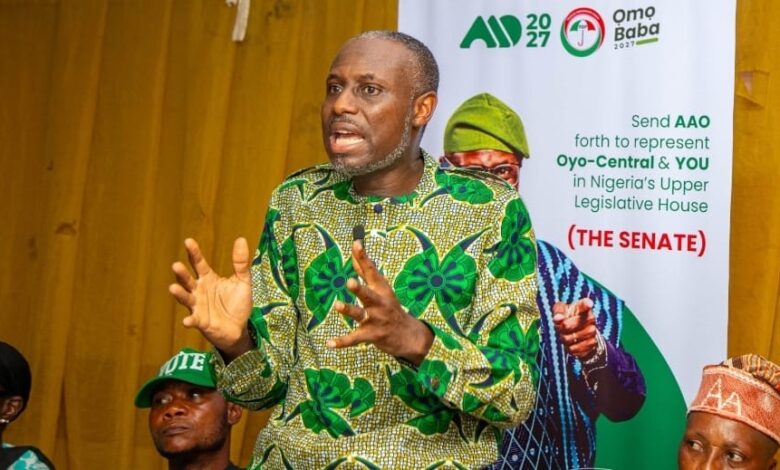
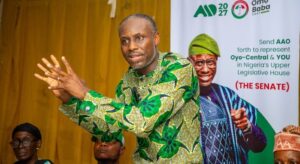
The Peoples Democratic Party (PDP) senatorial candidate for Oyo Central, Engr. Ayobami Akinyode Olunloyo, has promised to establish a searchable public register of constituency projects within six months of assuming office if elected in 2027.
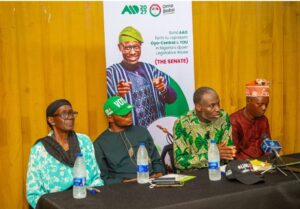
Olunloyo, who made the promise at a media parley with journalists on Sunday, said the initiative would enable residents to monitor constituency projects, track budgetary allocations and hold their representatives accountable for the use of public funds.

He explained that the proposed register would contain information on project locations, responsible government agencies, budget allocations, implementation status and evidence of delivery.
According to him, the initiative would be supported by quarterly updates and annual public accountability meetings across the 11 local government areas in the senatorial district.

“I do not want the people of Oyo Central simply to trust me. I want you to be able to check me,” he said.
The PDP candidate said his approach to representation would be anchored on transparency and the delivery of projects that directly address the needs of constituents.
He maintained that budgetary allocations and payments should not be presented as evidence of development without corresponding results that residents could see and use.
“An appropriation is not a project. A release is not a project. A payment is not a project. A project is what the citizen can actually use, something that delivers tangible benefits in their day-to-day life,” Olunloyo said.
He identified poor road access, inadequate water supply and other infrastructure deficits as some of the challenges he encountered during visits to communities across the senatorial district.
Olunloyo noted that Oyo Central comprised 11 local government areas with varying geographical and developmental needs, stressing that effective representation required a clear understanding of the peculiarities of each community.
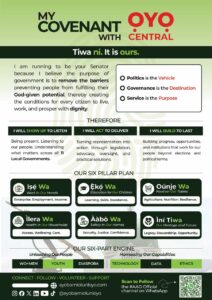
He outlined six priority areas of his proposed agenda, covering employment and livelihoods, education, food security, healthcare, security and the preservation of the district’s heritage and future.
The candidate also promised to involve women and young people in identifying community needs and developing interventions, describing them as partners in the development process.
On the responsibilities of a senator, Olunloyo said the office should not be confused with those of the governor or local government chairpersons, noting that senators could pursue development through legislation, budget scrutiny, committee investigations and partnerships with relevant institutions.
“A microphone in the Senate is not a bulldozer. A speech does not repair a road. A motion does not automatically put medicine in a clinic,” he said.
He added that his responsibility, if elected, would include following up on projects, engaging relevant authorities and informing constituents about progress, setbacks and the responsibilities of other levels of government.
Olunloyo urged voters to assess candidates based on their preparation, ideas, capacity and record rather than campaign promises, insisting that public office should be treated as a responsibility rather than an entitlement.
“The Olunloyo name may open a door. But it cannot do the work for me. That work is mine. The preparation is mine. The choices will be mine. The accountability must be mine,” he said.
He further pledged to remain accessible to constituents throughout his tenure, saying his ambition was to make representation more responsive to the everyday needs of the people.
“I will show up to listen. I will act to deliver. I will build to last,” he said.