Ademokoya demands special needs education in teachers’ training
…seeks increased funding, modern policies, assistive technology
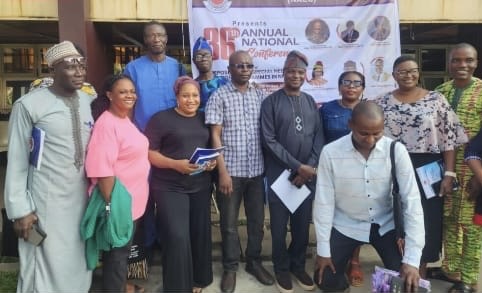
The President of the National Association of Exceptional Children (NAEC), Professor Julius Abiola Ademokoya, has called for the integration of special needs education into teacher training curricula across primary, secondary and tertiary institutions in Nigeria.
Ademokoya also urged governments at all levels to increase funding for special education and introduce modern policies, saying adequate investment in teacher training, assistive technology and supportive learning environments would enable persons with disabilities to contribute meaningfully to national development.

He made the call at the 36th Annual National Conference of NAEC, held at the University of Lagos (UNILAG), Akoka, Lagos, with the theme, “Repositioning Special Needs Education in Nigeria.”
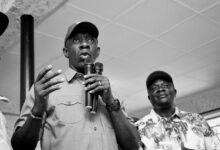
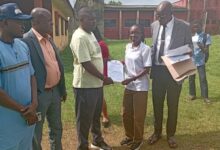
The three-day conference brought together special education practitioners, academics, policymakers, teachers and other stakeholders to deliberate on the challenges facing special needs education and strategies for achieving a more inclusive education system.


Ademokoya said Nigeria could not achieve an equitable education system if children and adults with disabilities continued to encounter barriers to quality education.
He said, “Government at all levels must increase funding for special education. We also need policies that are relevant to the realities of the 21st century.
“We must provide assistive technologies, train our teachers and create supportive learning environments. When people with disabilities are properly educated and supported, they can contribute meaningfully to the growth and development of Nigeria.”
The NAEC president stressed that inclusive education should not be treated as the responsibility of special schools alone, arguing that teachers in mainstream schools must also be equipped to accommodate learners with different abilities.
He called on the Teachers Registration Council of Nigeria (TRCN) to make special needs education an integral component of teacher preparation, saying such training would enable teachers to identify and respond appropriately to the diverse needs of learners.
Ademokoya said, “Every teacher should have some knowledge of inclusive teaching techniques. We cannot continue to assume that special needs education is only the responsibility of teachers in special schools.
“If we want inclusion to work, our teacher education system must change. Teachers at all levels must be prepared to accommodate learners with different needs.”
He further advocated continuous professional development for teachers, improved teaching resources and greater investment in assistive technologies to enable children with disabilities to learn effectively alongside their peers.
Delivering the keynote address, the Vice-Chancellor, University of Calabar, Professor Florence Obi, expressed concern over what she described as the ineffective implementation of Nigeria’s inclusive education policy.
Obi criticised the continued reliance on segregated special schools, saying the practice could reinforce stigma and undermine the objective of inclusive education.
She said, “Our inclusive education policy remains largely ineffective because we continue to approach special needs education through segregation.
“When children with disabilities are placed separately in special schools without creating inclusive environments within mainstream schools, we are not achieving true inclusion. Rather, we risk reinforcing stigma and segregation.”
The vice-chancellor called for a fundamental shift in the country’s approach to special needs education, saying policy pronouncements must be matched with adequate infrastructure, funding and professional manpower.
She noted that many schools operating inclusive education programmes faced serious shortages of special educators and other professionals required to support learners with disabilities.
According to her, the shortage included special education teachers, speech therapists, occupational therapists, counsellors and other specialists.
Obi said, “You cannot have meaningful inclusive education without the necessary personnel and infrastructure. We need special educators, speech therapists, occupational therapists, counsellors and other professionals who can provide the support these children require.
“Funding is also critical. It is not enough to declare that we have an inclusive education policy; we must provide the resources and manpower needed to implement it.”
She urged governments, educational institutions, professional bodies and other stakeholders to strengthen collaboration towards effective implementation of inclusive education policies.
Also speaking, a lecturer at Kano State University of Education, Dr Aliyu Jinguwa, highlighted what he described as positive developments in special needs education in parts of Northern Nigeria.
Jinguwa said increased awareness, improved infrastructure in some tertiary institutions and expanding educational opportunities had contributed to progress in the region.
He also linked the decline in street begging among some persons with disabilities to increased access to education and growing awareness of alternative opportunities.
He said, “There has been an improvement in awareness in Northern Nigeria. We are also seeing better infrastructure in some of our campuses and increased opportunities for persons with disabilities to access education.
“One of the positive developments is the reduction in street begging in some areas because more people are beginning to see education as an alternative pathway for persons with disabilities.”
Jinguwa, however, called for sustained investment to consolidate the progress recorded, stressing the need to ensure that persons with disabilities had equal access to quality education and opportunities for self-development.
The stakeholders maintained that repositioning special needs education required a comprehensive reform covering teacher preparation, curriculum development, school infrastructure, funding, assistive technology and professional support services.
They also stressed the need to close the gap between policy formulation and implementation, urging governments and relevant agencies to translate existing inclusive education policies into practical interventions.
According to them, equipping teachers with inclusive teaching skills would enable schools to respond more effectively to learners with different abilities while reducing discrimination and exclusion.
The stakeholders further emphasised that investing in special needs education was not only a social responsibility but also a national development imperative, as persons with disabilities represented an important component of the country’s human capital.
They therefore called on governments, TRCN, universities, colleges of education, schools and professional bodies to work together to build an education system in which disability would no longer constitute a barrier to quality education.