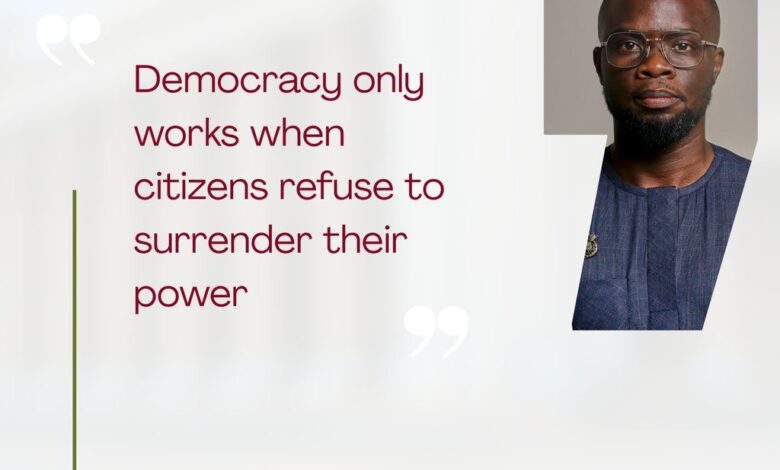
Democracy only works when citizens refuse to surrender their power.” — Akeem Salawu
Democracy only works when citizens refuse to surrender their power.” — Akeem Salawu
Democracy is often described as a system of government where power belongs to the people. Yet, in reality, that power does not automatically remain in the hands of the citizens. It must be actively protected, exercised, and defended. Democracy is not sustained by institutions alone—constitutions, courts, and elections may form its structure, but the true life of democracy comes from the vigilance, participation, and courage of ordinary people.
When citizens vote, speak up, organize, and demand accountability from their leaders, they preserve the essence of democratic governance. Voting is more than a periodic civic ritual; it is a declaration that the people remain the ultimate authority in shaping their society. Likewise, public engagement—through community meetings, advocacy, public debate, and peaceful protest—ensures that leadership remains responsive to the needs and aspirations of the population. In these moments, democracy becomes not just a political system but a living expression of collective responsibility.

However, democracy begins to weaken when citizens become silent, indifferent, or disengaged. Apathy creates a vacuum where accountability disappears and power quietly drifts away from the public sphere. In such circumstances, decision-making can become concentrated in the hands of a few individuals or groups who may prioritize personal or political interests over the common good. History has shown that democratic institutions can gradually lose their effectiveness when the people they are meant to serve withdraw from the process.


The strength of any democratic society therefore lies not merely in its laws or its leaders, but in the awareness and determination of its citizens. People who understand the value of their voice and the importance of their participation recognize that democracy requires effort. Their vote, their voice, and their civic engagement are not privileges to be ignored; they are responsibilities to be exercised consistently and thoughtfully.

Real and lasting change often begins with ordinary individuals who refuse to surrender their power. When citizens insist on transparency, challenge injustice, and demand leadership that genuinely serves the people, they reaffirm the principle that government exists for the public good. Through such engagement, democracy remains dynamic, accountable, and capable of progress.
Ultimately, democracy thrives when people recognize that their participation is the foundation upon which the system stands. By refusing to relinquish their influence and by actively shaping the decisions that affect their lives, citizens ensure that democracy remains true to its promise—a government of the people, by the people, and for the people.