Dangote refinery breaks silence on petrol price hike amid Middle East crisis
Dangote refinery breaks silence on petrol price hike amid Middle East crisis
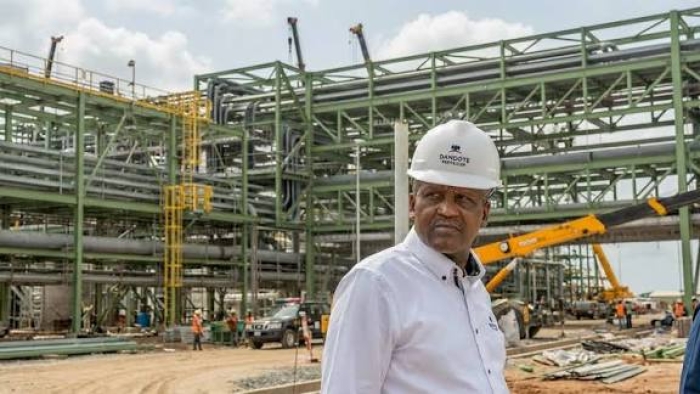
Dangote Petroleum Refinery has formally addressed the N100 increase in its ex-depot petrol price, linking the adjustment to a volatile global landscape fueled by escalating conflicts in the Middle East. As tensions rise between Israel, Iran, and the United States, the strategic Strait of Hormuz has faced significant disruptions, halting the movement of nearly half the world’s crude oil and condensates. This geopolitical friction has sent Brent crude prices climbing and tightened the global supply of refined products, forcing the refinery to raise its gantry rate from N774 to N874 per litre. The ripple effect was felt immediately at the pumps, with major filling stations in Abuja adjusting their prices to N960 per litre shortly after the announcement.

In a comprehensive statement, the refinery management explained that the decision was driven by sharp increases in both crude and freight costs. The ongoing war has not only disrupted refining activities worldwide but has also forced the shutdown of several international facilities, leading to a widespread shortage. Despite these pressures, the refinery emphasized its role as a stabilizing force for the Nigerian economy. By implementing a measured 12 percent increase, the company revealed that it has actually absorbed 20 percent of the total cost escalation to prevent the domestic market from bearing the full weight of the international price shock.

A significant challenge highlighted by the refinery is the high cost of sourcing local feedstock. Nigerian crude oil currently trades at a premium of $3 to $6 above the Brent benchmark. When combined with freight charges, the landing cost of crude at the facility sits between $88 and $91 per barrel. While the Nigerian National Petroleum Company Limited provides some crude in Naira, the five cargoes received monthly fall far short of the thirteen required to meet domestic demand. This deficit forces the refinery to turn to international traders who charge additional premiums, especially since domestic upstream producers have reportedly failed to supply the volumes mandated under the Petroleum Industry Act.


Looking toward the future, the refinery warned that selling products below cost would jeopardize its long-term ability to maintain production and guarantee an uninterrupted supply for the nation. However, the company is prioritizing the Nigerian market to insulate it from global supply shocks. To further mitigate rising costs, the refinery is accelerating the deployment of trucks powered by Compressed Natural Gas. This rollout, scheduled to begin this month, aims to enhance distribution efficiency and lower logistics expenses across the downstream sector, reaffirming the refinery’s commitment to securing sustainable energy stability for Nigeria.

The refinery’s explanation highlights a precarious paradox where a domestic facility, built to ensure national energy self-sufficiency, remains critically tethered to the same global volatility it was designed to mitigate. While the management frames the N100 increase as a “measured adjustment” necessitated by Middle Eastern tensions and the expensive premiums on Nigerian crude, the report underscores a deeper systemic failure in the implementation of the Petroleum Industry Act (PIA). By revealing that domestic upstream producers are failing to supply the required crude volumes, the refinery exposes a disconnect between legislative intent and operational reality, forcing a reliance on international traders that inflates local prices. Although the absorption of 20% of cost escalations and the shift toward CNG logistics offer temporary relief, the situation suggests that until the domestic supply chain is fully integrated and the reliance on international benchmarks is decoupled, the Nigerian consumer will remain an involuntary stakeholder in distant geopolitical conflicts.