Bodija Explosion Funds and the Politics of Falsehood: Setting the Record Straight on Makinde
Bodija Explosion Funds and the Politics of Falsehood: Setting the Record Straight on Makinde
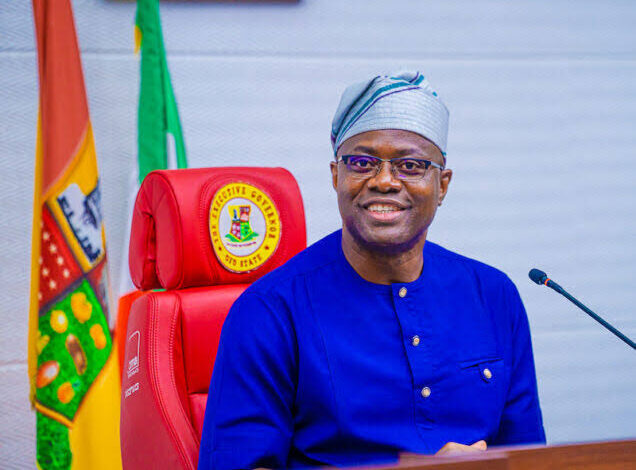
Recent remarks credited to former Ekiti State Governor, Ayodele Fayose, alleging that the Federal Government released ₦50 billion to Oyo State Governor, ‘Seyi Makinde, and that the governor quietly warehoused the funds to advance a personal presidential ambition, are inaccurate and misleading.
The facts are clear and verifiable: the Federal Government did not disburse ₦50 billion to Oyo State. This explains why no evidence of such a transfer has been produced. Even the document circulated to support the claim shows that the amount in question was never released.

What exists is not a payment, but a promise.


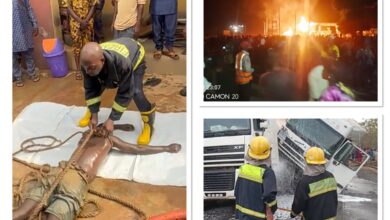
In the aftermath of the January 2024 Bodija explosion, which resulted in loss of lives, widespread destruction of property and deep trauma for residents, President Bola Tinubu did not visit Oyo State. Governor Makinde travelled to Abuja with a detailed report on the incident and formally requested federal assistance. Following discussions, the Federal Government pledged to provide ₦50 billion as intervention support.

That pledge did not translate into full disbursement.
When funds were eventually released, only ₦30 billion was paid. The balance of ₦20 billion was not released, following the governor’s refusal to accede to alleged demands for inducements linked to the remaining sum.

At no point did the governor attempt to politicise the tragedy or sensationalise the negotiations. Rather than engage in public disputes over promises and partial releases, the administration focused on utilising the funds received to address the immediate and long-term needs arising from the disaster.
Governor Makinde publicly acknowledged the Federal Government’s support during the inauguration of an independent committee established to manage and oversee the utilisation of the relief funds. The committee was mandated to ensure transparency, accountability and fairness in the disbursement process.
From the ₦30 billion received, direct financial assistance was paid to victims as immediate relief, while the remaining funds were deployed for reconstruction and restoration. Roads within the affected Bodija axis were rehabilitated, rebuilding of damaged structures is ongoing, and plans are in place for a memorial at the explosion site to honour those who lost their lives. In addition, safety measures, policies and security frameworks have been strengthened to prevent a recurrence of such an incident in Oyo State.
Clarifying further, the ₦4.5 billion announced by the Oyo State Government represents direct support paid to victims, including both landlords and tenants, and accounts for about 15 per cent of the total funds released. This intervention ensured that those most affected received immediate relief, while government simultaneously embarked on broader infrastructural and environmental remediation efforts.
These facts are not speculative; they are evident and verifiable.
The renewed attempt to distort the narrative coincides with Governor Makinde’s recent declaration during a media interaction that he would not support President Tinubu’s re-election bid in 2027. This position attracted attention because the governor supported the president in 2023, a decision he has since said he regrets, citing concerns over moves towards a one-party state.
Shortly after this declaration, political tensions escalated. A group linked to allies of the Minister of the Federal Capital Territory, Nyesom Wike, moved to announce a purported PDP caretaker committee in Oyo State, an action that was widely rejected and from which notable individuals publicly dissociated themselves.
These developments, observers note, are driven by political calculation rather than principle.
Efforts to portray Governor Makinde as dishonest or detached from his party structure ignore political reality. He remains one of the few serving governors elected on the platform of the Peoples Democratic Party, with a mandate anchored on performance, credibility and public trust.
While misinformation may offer momentary advantage to its purveyors, it cannot withstand factual scrutiny.
Beyond partisan considerations, the issue raises broader questions about the health of Nigeria’s democracy and the use of intimidation or false narratives to silence dissenting voices. Governor Makinde’s position, as stated, is a refusal to compromise on truth or principle.
Ultimately, the facts surrounding the Bodija explosion intervention and the use of relief funds remain clear. The narrative being pushed does not align with documented events, and the truth, once fully told, stands on its own.