EAC advocates inclusive assessment, support for children with learning difficulties
EAC advocates inclusive assessment, support for children with learning difficulties
The Educational Advancement Centre (EAC) has called for major changes to Nigeria’s education and examination systems to ensure that children with learning difficulties and other special educational needs are properly supported and given fair opportunities to demonstrate their abilities.
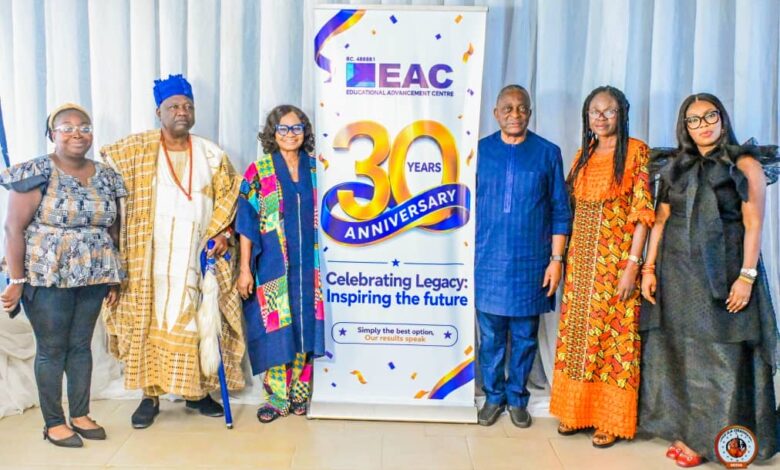
The call was made at the EAC’s 30th anniversary celebration in Ibadan, where education experts advocated changes in classroom support, assessment methods and examination arrangements for children with special educational needs.



The anniversary, held at the EAC headquarters, Old Bodija, Ibadan, on Friday, had the theme, “Celebrating Legacy: Inspiring the Future.”

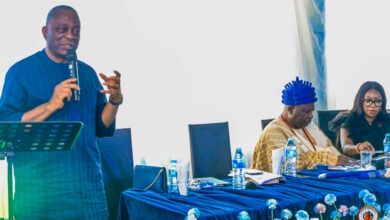
Speaking at the event, the CEO-designate of EAC and a director of inclusion with over 20 years’ experience in the United Kingdom, Fola Adekola, said learning difficulties should not be mistaken for intellectual inability.


Adekola said children who struggled with certain aspects of learning could still excel when provided with the right support.
“Difficulty to learn does not mean inability to learn. And the fact that somebody is struggling with one aspect does not mean they have a problem with their cognition, their intelligence. They might just need a different way to learn,” she said.
She called for greater support for children with invisible disabilities, including those struggling with reading, writing and other aspects of learning.
According to her, schools should stop labelling such children as incapable and instead provide accommodations that would allow them to demonstrate their abilities.
Adekola also advocated changes to examination arrangements, including the use of laptops for children who have difficulty writing, separate examination rooms, rest breaks and prompts where necessary.
“If a child cannot write, why are we forcing them to write? Provide access to a laptop, allow them to have a small room, rest breaks, prompts, there are lots and lots of things that we can do to make sure that all, every child can access learning and show their potential,” she said.
She said the country needed to move beyond discussing inclusive education and begin implementing practical policy changes.
“No child should be left behind. We’re talking about inclusive education, but what are the changes we are making today?” she asked.
Adekola said the next phase of EAC’s work should focus on ensuring that appropriate support systems were put in place immediately rather than waiting for future generations.
“What needs to change in the next 30 years is those accommodations need to start today. Change in policy and making sure that every child has the right support in the classroom,” she said.
Also speaking, a child and adolescent psychiatrist at the University College Hospital, Ibadan, Dr Oluwabunmi Folabomi-Omole, called for early identification and intervention for children with special educational needs and disabilities.
She said identifying learning and behavioural difficulties should not be left to professionals alone, noting that teachers, parents and members of the wider community had important roles to play.
“It is the role of everybody to be able to identify these things. So, whether you’re a teacher, a parent, or just somebody in the general community, being able to pick out signs, symptoms of a person who may have problems or may have behavioural problems or problems in learning and everything is quite important,” she said.
Folabomi-Omole said early identification would enable children to receive appropriate intervention before their difficulties became more pronounced.
She also called for government policies that would make classrooms and examination environments more accommodating.
“One of the important things is to put policies, things in place to make the classroom environment conducive for people that have special educational needs,” she said.
According to her, support could include technological aids, additional time, regular breaks and sensory rooms for learners who require them.
The co-founder of EAC, Pastor Muyiwa Bamgbose, also called for a fundamental rethink of conventional assessment systems, saying examination results should not be regarded as the only measure of a child’s ability or future potential.
He urged education stakeholders to reduce excessive emphasis on grades and standardised testing and recognise that children have different abilities and learning styles.
“We should begin to play down on some of the metrics that we use, rushing to have A’s, and then making sure people are tested the same way. The things that come to people in life are different. And the way people react to it will be different,” Bamgbose said.
He specifically called on examination bodies, including the West African Examinations Council (WAEC), National Examinations Council (NECO) and Joint Admissions and Matriculation Board (JAMB), to introduce appropriate accommodations for candidates with special educational needs.
“I believe that we should make education inclusive. Then we should allow for that diversity in our assessments. WAEC needs to give accommodation, NECO needs to give accommodation, JAMB needs to give accommodation,” he said.
Bamgbose explained that such accommodations could include additional time, quieter examination rooms and rest breaks for candidates who needed them.
He stressed that such measures were not intended to lower academic standards but to ensure that examinations measured a candidate’s knowledge and ability rather than the effect of a particular learning difficulty on their performance.
“Our narrative of assessments needs to change. We need to be more inclusive in our accommodations, so that we can get the best,” he said.
The EAC co-founder said the centre’s focus was now shifting towards the future of education, urging government and other stakeholders to implement the proposed changes.
“Our forum is called EAC Education Futures Forum. We want to focus on the future. Enough of what we have done, enough of what we have damaged, let’s look at the future,” he said.
The Special Guest of Honour, the Orangun of Oke-Ila, Osun State, Oba Adedokun Abolarin, said the presentations had made him reconsider how children with learning difficulties were being supported in his Abolarin College.
The monarch said a student in the school had been identified as having learning difficulties but had not received adequate individual assessment.
“From what I’ve heard today, we have not done a correct assessment of his state. We’ve been able to identify, but no correct assessment. Whether he’s creative or not. Whether the environment is not conducive for easy learning,” he said.
Oba Abolarin said he would engage the student and his parents to determine the appropriate support required, stressing that children’s individual rights and abilities must be recognised.
He commended EAC for its 30 years of contribution to education and urged government, individuals and public-spirited Nigerians to take greater responsibility for improving the country’s education system.
“Government alone cannot do it. We need to support government. We are government. And we need public-spirited people to come round and have utmost interest in the adequate education of our young souls. The future is important,” the monarch said.