Orangun Seeks Inclusive Education, Proper Assessment for Children With Special Needs
Orangun Seeks Inclusive Education, Proper Assessment for Children With Special Needs
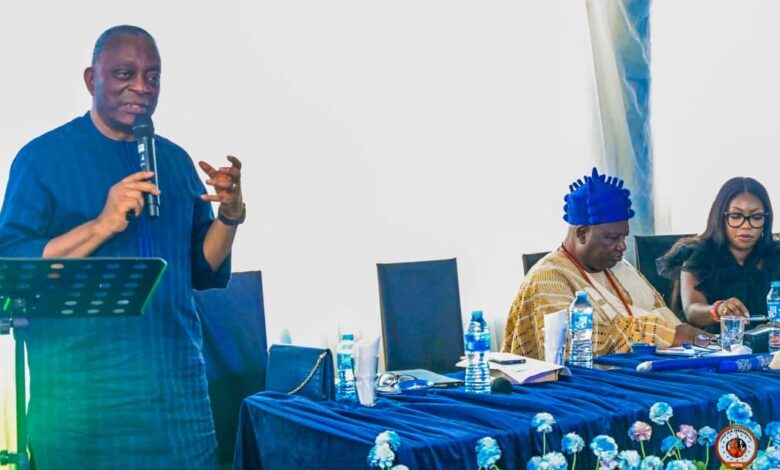
The Orangun of Oke-Ila, Osun State, Oba Adedokun Abolarin, has called for a more inclusive education system and proper assessment of children with special educational needs to enable them realise their full potential.
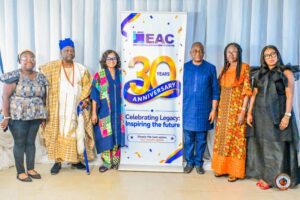
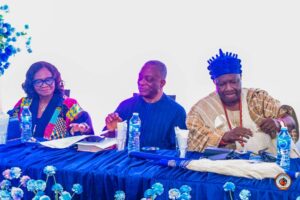
Oba Abolarin made the call on Friday at the 30th anniversary celebration of the Educational Advancement Centre (EAC), held at its headquarters in Old Bodija, Ibadan, with the theme, “Celebrating Legacy: Inspiring the Future.”


The monarch, who was the Special Guest of Honour, said the presentations at the event made him realise the need to pay greater attention to the individual abilities and circumstances of children experiencing learning difficulties.
He disclosed that a student at his Abolarin College had been identified as having learning difficulties but had not received adequate assessment or individual attention.


Oba Abolarin said, “I listened to the two lectures delivered by young, dynamic, resourceful, brilliant souls in the area of special needs. And I felt guilty because in my school, Abolarin College, I have my boy, I have never interacted with him once. And it’s like we are just trying to push him.”
He said identifying a learning difficulty was not enough without determining the specific needs, abilities and learning environment of the child.
“But from what I’ve heard today, we have not done a correct assessment of his state. We’ve been able to identify, but no correct assessment. Whether he’s creative or not. Whether the environment is not conducive for easy learning,” he said.
The traditional ruler said he would personally engage the student and his parents to determine how best to support his development.
“What I’m taking away from here is I’m bringing him close to me, dialogue with his parents, and see whether we are going to create the richest Nigerian out of this guy in the foreseeable future,” he said.
Oba Abolarin also stressed that improving education should not be left to government alone, urging individuals and public-spirited Nigerians to support efforts to provide quality education.
“And government alone cannot do it. We need to support government. We are government. And we need public-spirited people to come round and have utmost interest in the adequate education of our young souls. The future is important,” he said.
He also called for greater recognition of the role of traditional institutions in community development, saying traditional rulers had responsibilities beyond cultural matters.
“I’m in charge of my community. I’m the Chief Security Officer, I’m the Chief Education Officer, I’m the chief everything. I’m in charge,” he said.
The monarch urged Nigerians not to lose hope in the country, stressing the need for citizens to contribute positively to their communities.
“Don’t lose hope about Nigeria. Do, wherever you find yourself, be positive, and that’s the only way we can get things done in Nigeria,” he said.
He also urged Nigerians to combine local commitment with global ambition, saying, “Think local, dream local, act, be global.”
Speaking as a guest lecturer, Fola Adekola, the CEO-designate of EAC and a director of inclusion with over 20 years’ experience in the United Kingdom, said learning difficulties should not be mistaken for intellectual inability.
“For me, some of the key things are that, one, difficulty to learn does not mean inability to learn. And the fact that somebody is struggling with one aspect does not mean they have a problem with their cognition, their intelligence. They might just need a different way to learn,” she said.
Adekola, who shared the experience of her daughter, said the girl, who had struggled with reading and writing and was diagnosed with dyslexia, eventually became a law graduate after receiving appropriate support in school.
“Today, through the support that she had in school, she’s a graduate of law,” she said.
She urged schools to stop labelling children who struggle academically and instead provide support that would enable them demonstrate their abilities.
She also called for changes in examination systems to accommodate children whose disabilities make conventional writing difficult.
“For exams, I have looked, they need to have access to using a laptop. If a child cannot write, why are we forcing them to write? Provide access to a laptop, allow them to have a small room, rest breaks, prompts, there are lots and lots of things that we can do to make sure that all, every child can access learning and show their potential,” Adekola said.
She urged government to translate inclusive education policies into practical measures in schools.
“No child should be left behind. We’re talking about inclusive education, but what are the changes we are making today?” she asked.
Another guest lecturer, Dr Oluwabunmi Folabomi-Omole, a child and adolescent psychiatrist at the University College Hospital, Ibadan, and lecturer at the University of Ibadan, emphasised the importance of early identification and intervention.
Folabomi-Omole said teachers, parents and members of the wider community all had a role to play in identifying learning and behavioural difficulties.
“It is the role of everybody to be able to identify these things. So, whether you’re a teacher, a parent, or just somebody in the general community, being able to pick out signs, symptoms of a person who may have problems or may have behavioural problems or problems in learning and everything is quite important,” she said.
She explained that early identification would facilitate early referral and intervention, thereby improving the prospects of better outcomes.
“Because when we identify early, then we are able to refer early, and then we can intervene early. The earlier the intervention, the more likely that the outcome will be better,” she said.
The psychiatrist also called on government to establish policies that would make classrooms more accommodating for children with special educational needs.
She said such measures could include technological aids, additional time, rest breaks and sensory rooms during examinations.
“We know that a person that has special needs may need more time allowance, may need frequent breaks, may need sensory rooms where they just need to take some time out and everything,” she said.
Earlier, the co-founder of EAC, Pastor Muyiwa Bamgbose, described the centre’s 30-year journey as challenging but rewarding, particularly because of its contribution to rethinking education.
“In the last 30 years, well, it has been exciting. Tough, but exciting. It’s exciting because we have seen lives changed, we have seen results, we have seen changes being affected, we have been able to at least promote the concept of reimagining education,” Bamgbose said.
He called for a review of conventional assessment methods, arguing that examination results should not be regarded as the only measure of a person’s potential.
“Life is different from mere tests,” he said.
Bamgbose urged examination bodies, including the West African Examinations Council (WAEC), National Examinations Council (NECO) and Joint Admissions and Matriculation Board (JAMB), to provide appropriate accommodations for candidates with special educational needs.
“I believe that we should make education inclusive. Then we should allow for that diversity in our assessments. WAEC needs to give accommodation, NECO needs to give accommodation, JAMB needs to give accommodation,” he said.
He said accommodations could include additional time, separate examination rooms and rest breaks for candidates who required them.
According to him, the purpose of such measures was not to lower academic standards but to give learners with different neurological capacities a fair opportunity to demonstrate what they knew.
“So, I think our narrative of assessments needs to change. We need to be more inclusive in our accommodations, so that we can get the best. It’s not that we are trying to condone people that are not capable or inaptitude, but we are trying to accommodate the diversity in neural capacities,” he said.
Bamgbose urged government and other education stakeholders to implement the recommendations, saying the EAC was now focusing increasingly on the future of education.
“We hope government will listen, we hope the educational stakeholders will listen, so that we can make Nigeria a better place for the future,” he said.
“Our forum is called EAC Education Futures Forum. We want to focus on the future. Enough of what we have done, enough of what we have damaged, let’s look at the future,” Bamgbose added.